


GLP-1 Weight Loss: A Patient’s Guide to Semaglutide, Tirzepatide, Liraglutide & Retatrutide
If losing weight has felt harder than simply “eating less and exercising more,” there is a biological reason.
Body weight is influenced by appetite hormones, genetics, metabolism, sleep, medications, medical conditions, environment and many other factors. For some people living with overweight or obesity, lifestyle changes alone may not produce enough weight loss to meaningfully improve health.
That is where prescription weight-management medications—including treatments commonly referred to as GLP-1 medications—may help.
Medications containing semaglutide, tirzepatide and liraglutide can influence the biological signals involved in hunger and fullness. Used appropriately, they may help some patients eat less, feel satisfied sooner and achieve clinically meaningful weight loss.
However, GLP-1 treatment is prescription medical care—not simply a weight-loss injection. The medication needs to be selected appropriately, introduced gradually, monitored for side effects and combined with a sustainable nutrition, activity and long-term weight-management plan.
This guide explains what patients should know before starting.
Important: This article provides general health information and does not replace an individual medical assessment, diagnosis or treatment plan.

What Is GLP-1?
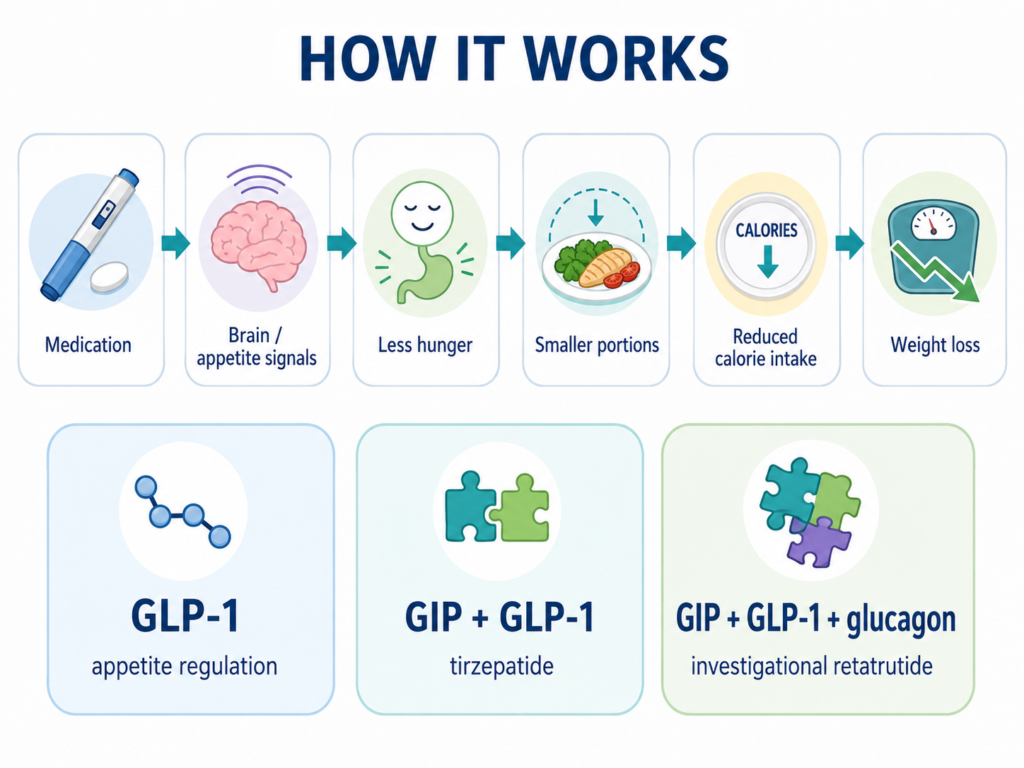
GLP-1 stands for glucagon-like peptide-1, a hormone naturally released by the intestine after eating.
Among its functions, GLP-1 helps regulate blood sugar and sends signals to areas of the brain involved in appetite and food intake. Prescription GLP-1 receptor agonists mimic some of these natural signals.
For weight management, the practical effect is that many patients experience:
- Less hunger
- Feeling full sooner during meals
- Greater satisfaction after eating
- Fewer cravings or less interest in food
- Reduced calorie intake
Some medications act only on the GLP-1 pathway, while newer treatments act on additional hormone receptors.
That distinction is important because semaglutide, tirzepatide, liraglutide and retatrutide are not identical medications.
How Do GLP-1 Medications Help With Weight Loss?
GLP-1-based treatment does not simply “burn fat.”
Instead, it changes several of the biological signals that influence eating and metabolism.
1. It helps reduce appetite
GLP-1 receptors are found in areas of the brain involved in appetite regulation. Activating these receptors can make a person feel less hungry and reduce calorie intake. Semaglutide’s FDA prescribing information specifically describes GLP-1 as a physiological regulator of appetite and caloric intake.
2. You may feel satisfied with less food
Many patients notice that they can comfortably stop eating with smaller portions than they previously needed to feel satisfied.
3. It helps regulate blood glucose
GLP-1-based medications can affect insulin and glucagon signaling, particularly when glucose levels rise after eating.
This is one reason several molecules originally became familiar through their use in type 2 diabetes.
4. Some medications target more than GLP-1
Tirzepatide activates both GIP and GLP-1 receptors. Its effects on appetite and calorie intake contribute to weight reduction.
Retatrutide, which remains investigational, is designed to activate GIP, GLP-1 and glucagon receptors and is therefore described as a triple receptor agonist.
What Are the Different Types of GLP-1 Weight-Loss Medications?
People often refer to all of these medicines as “GLP-1s,” but scientifically they differ.
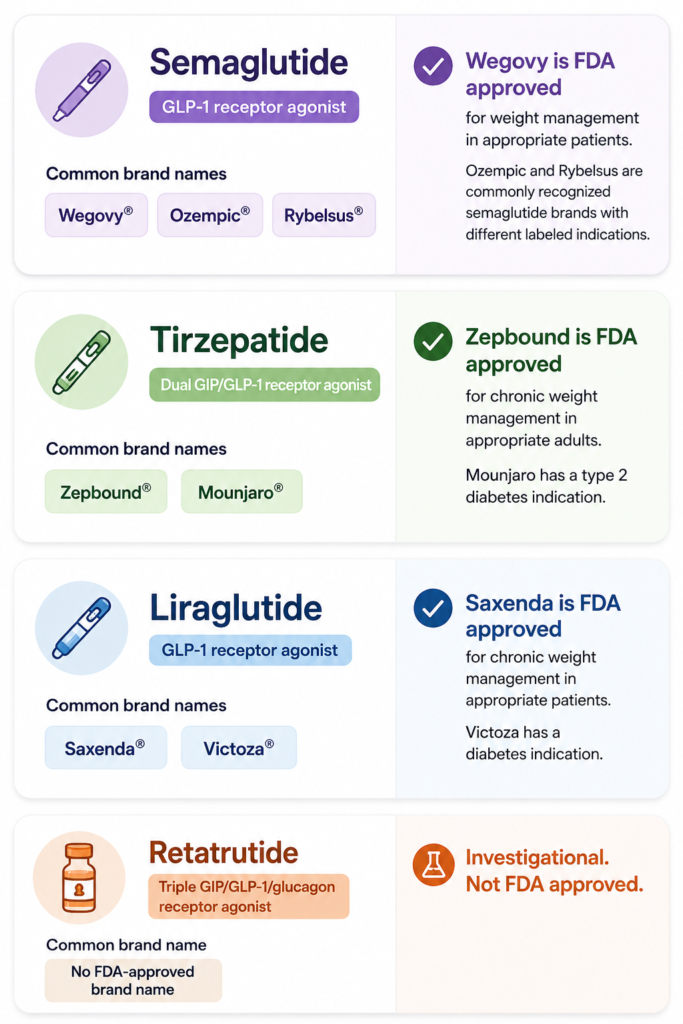
| Active ingredient | Type | Common brand names | Weight-management status in the U.S. |
|---|
| Semaglutide | GLP-1 receptor agonist | Wegovy, Ozempic, Rybelsus | Wegovy is FDA approved for weight management in appropriate patients. Ozempic and Rybelsus are commonly recognized semaglutide brands with different labeled indications. |
| Tirzepatide | Dual GIP/GLP-1 receptor agonist | Zepbound, Mounjaro | Zepbound is FDA approved for chronic weight management in appropriate adults. Mounjaro has a type 2 diabetes indication. |
| Liraglutide | GLP-1 receptor agonist | Saxenda, Victoza | Saxenda is FDA approved for chronic weight management in appropriate patients. Victoza has a diabetes indication. |
| Retatrutide | Triple GIP/GLP-1/glucagon receptor agonist | No FDA-approved brand name | Investigational. Not FDA approved. |
Are GLP-1 Medications FDA Approved for Weight Loss?
Yes—but not every GLP-1-related product or brand is FDA approved specifically for weight management.
Semaglutide: Wegovy
Wegovy contains semaglutide and has FDA-approved indications that include reducing excess body weight and maintaining weight reduction long term in appropriate patients, alongside reduced-calorie nutrition and increased physical activity.
Wegovy also has an FDA-approved indication to reduce the risk of major cardiovascular events in certain adults with established cardiovascular disease and overweight or obesity.
Tirzepatide: Zepbound
Zepbound contains tirzepatide. The FDA approved it for chronic weight management in adults with obesity or adults with overweight plus at least one weight-related condition, together with reduced-calorie nutrition and increased physical activity.
Liraglutide: Saxenda
Saxenda contains liraglutide and is FDA approved for chronic weight management in appropriate adults and certain adolescents.
What about retatrutide?
This distinction is especially important.
As of August 2026, retatrutide is NOT FDA approved.
Retatrutide is an investigational triple GIP/GLP-1/glucagon receptor agonist being developed by Eli Lilly. Phase 3 clinical trials have produced encouraging results, but the medication remains under investigation and has not been approved by the FDA or another regulatory agency for public use.
Eli Lilly stated in July 2026 that it plans to submit retatrutide to the FDA in 2027. Regulatory review would still be required before any approval.
Be cautious of online websites selling “retatrutide”
The FDA has specifically warned about unapproved GLP-1 products and states that retatrutide cannot legally be used in compounding under federal law.
Your use of retatrutide should only come from an approved board-certified Dr and under surpervision of a Dr.
Am I a Candidate for GLP-1 Weight-Loss Treatment?
Possibly—but the right question is not simply:
“Do I want to lose weight?”
The better question is:
“Would treating my weight medically be expected to improve my health, and is a GLP-1-based medication appropriate and safe for me?”
For adults, prescription weight-management medications may generally be considered when a patient has:
- BMI of 30 kg/m² or above, or
- BMI of 27 kg/m² or above plus a weight-related health condition, such as high blood pressure or type 2 diabetes.
Other weight-related conditions can include problems such as abnormal cholesterol, cardiovascular disease or obstructive sleep apnea, depending on the medication’s labeling and the patient’s circumstances.
However, BMI is a screening tool—not a complete health assessment.
Your clinician should also consider your metabolic health, waist circumference, medical history, previous weight-loss attempts, medications, eating patterns, lifestyle, treatment goals and potential risks.
Why Might GLP-1 Treatment Be Suitable for Me?
GLP-1-based medical weight management may be worth discussing with a physician if excess weight is affecting your health and previous lifestyle efforts have not produced sufficient or sustainable results.
Potential reasons include:
You experience persistent hunger despite trying to reduce calories
Weight loss can activate biological mechanisms that increase hunger. Medication may help manage appetite while you establish a sustainable eating pattern.
You have weight-related health concerns
Weight reduction can improve health markers such as blood glucose, blood pressure and triglycerides. Even a 5% to 10% reduction in starting body weight may provide meaningful health benefits for some patients.
Weight repeatedly returns after previous weight-loss efforts
Obesity is a chronic disease. Long-term management may therefore be more appropriate than repeated short-term diets.
Lifestyle changes alone have not been enough
GLP-1 medication does not replace nutrition and physical activity. Instead, medication can be another tool within a comprehensive program. NIH guidance emphasizes that prescription weight-management medications work best alongside lifestyle treatment.
Who Should Not Automatically Start a GLP-1 Medication?
GLP-1 treatment is not appropriate for everyone.
Before prescribing, your doctor should review issues including:
- Personal and family medical history
- Current prescription medications
- Over-the-counter medications and supplements
- Diabetes treatment and risk of low blood glucose
- Previous pancreatitis or gallbladder problems
- Kidney problems or susceptibility to dehydration
- Significant gastrointestinal disease
- Diabetic eye disease where relevant
- Pregnancy or pregnancy plans
- Previous serious medication allergies
- Personal or family history of medullary thyroid carcinoma (MTC)
- Multiple Endocrine Neoplasia syndrome type 2 (MEN 2)
Wegovy, Zepbound and Saxenda carry boxed warnings related to thyroid C-cell tumors observed in animal studies and are contraindicated in people with a personal or family history of MTC or MEN 2. Whether these medications cause thyroid C-cell tumors in humans is not established.
Weight-loss medications also should not be used during pregnancy.
Your individual risk profile should always be reviewed by a qualified clinician.
Why Is Doctor-Supervised GLP-1 Weight Loss Important?
The safest GLP-1 journey is not simply:
Prescription → injection → weight loss.
It is an ongoing medical process.
Before treatment
A clinician can evaluate:
Your health status. This may include weight, BMI, blood pressure, metabolic health and relevant laboratory testing.
Your medical history. Certain conditions may change whether GLP-1 therapy is appropriate.
Your medications. Some treatments may interact with your weight-management plan or require adjustment.
Your goals. The objective should be improving health and maintaining meaningful weight reduction—not chasing an arbitrary number on the scale.
When treatment begins
GLP-1-based medications are commonly started at a lower dose and increased gradually according to the medication’s dosing schedule.
This titration period helps the body adjust and may improve tolerability.
Increasing the dose faster than prescribed is not a shortcut to faster weight loss and may increase side effects.
During treatment
Follow-up gives your medical team an opportunity to monitor:
- Weight and waist measurements
- Appetite changes
- Gastrointestinal symptoms
- Hydration
- Nutrition
- Blood pressure
- Blood glucose when relevant
- Medication tolerance
- Other medicines that may need adjustment
- Progress toward health goals
The plan can then be individualized rather than relying on a one-size-fits-all dose.
What Side Effects Can GLP-1 Medications Cause?
The most common adverse effects are gastrointestinal.
Depending on the medication, patients may experience:
- Nausea
- Diarrhea
- Constipation
- Vomiting
- Abdominal discomfort
- Indigestion or reflux
- Bloating or belching
- Reduced appetite
These symptoms are one reason medications are generally titrated gradually.
More serious complications can occur, although they are less common. Depending on the medication and the individual patient, warnings can include pancreatitis, gallbladder disease, dehydration and kidney injury, severe gastrointestinal reactions, allergic reactions and hypoglycemia when certain diabetes medications are used simultaneously.
Contact your clinician promptly for concerning or persistent symptoms.
Seek urgent medical attention for symptoms such as a severe allergic reaction or severe, persistent abdominal pain, particularly when accompanied by vomiting.
Are GLP-1 Medications Safe?
FDA approval means that the agency has reviewed evidence concerning a medication’s safety, efficacy and quality for its approved use.
It does not mean the drug is risk-free or appropriate for every person.
That distinction is why medical supervision matters.
The safest approach includes:
- Selecting an appropriate FDA-approved treatment when available.
- Obtaining a legitimate prescription.
- Filling the prescription through an appropriately licensed pharmacy.
- Following the prescribed dosing and escalation schedule.
- Reporting side effects rather than simply stopping, increasing or decreasing medication independently.
- Attending follow-up appointments.
- Avoiding unapproved products advertised online as equivalent to FDA-approved drugs.
The FDA has warned that unapproved versions of semaglutide and tirzepatide do not undergo the agency’s premarket review for safety, effectiveness and quality. It recommends obtaining prescriptions from a doctor and using a state-licensed pharmacy.
What About Compounded Semaglutide or Tirzepatide?
“Compounded” and “FDA approved” do not mean the same thing.
A compounded medication may sometimes be appropriate when a patient’s medical need cannot be met by an available FDA-approved medication, but compounded drugs themselves are not FDA approved.
That means the FDA does not review them before marketing for the same safety, effectiveness and quality standards applied to FDA-approved products.
Patients should discuss the exact source and formulation with their physician and understand why a compounded medication is being considered.
Be particularly cautious of products purchased through social media, “research peptide” websites or businesses willing to sell prescription drugs without a legitimate medical evaluation.
Will I Need to Diet While Taking a GLP-1?
Think less about going on a temporary “diet” and more about developing a nutrition strategy you can maintain.
GLP-1 medication can make it easier to eat less, but eating less does not automatically mean eating well.
Your healthcare team may recommend prioritizing:
- Adequate protein
- Vegetables, fruits and other nutrient-dense foods
- Fiber as tolerated
- Sufficient fluids
- Appropriate portion sizes
- Regular meals based on your individual tolerance
- Limiting foods that consistently worsen gastrointestinal symptoms
Physical activity remains important as well.
A comprehensive program usually includes both cardiovascular activity and resistance or strength training appropriate for your health and ability.
The goal is not merely a lower scale weight. It is better long-term health and function.
How Much Weight Can I Lose With a GLP-1?
There is no responsible way to promise a specific amount of weight loss to an individual patient.
Results vary according to:
- Medication
- Dose
- Duration of treatment
- Starting weight
- Metabolic health
- Diabetes status
- Medication tolerance
- Nutrition
- Activity
- Sleep
- Other medications and medical conditions
- Individual biological response
Clinical trials tell us what happened on average across groups of patients. They cannot predict exactly what one patient will experience.
Your medical team should focus on your response over time and whether treatment is producing enough health benefit to justify continuing.
How Fast Will I Lose Weight?
GLP-1 treatment is generally a gradual process.
For many medications, the first several weeks are spent increasing the dose step by step. Weight reduction then develops over months rather than days.
This is intentional.
Rapid weight loss is not automatically better weight loss, and aggressive dosing may cause unnecessary side effects.
A more useful question is:
“Am I losing weight at an appropriate rate while maintaining nutrition, hydration, muscle function and overall health?”
How Long Do I Need to Take a GLP-1 Medication?
There is no universal treatment duration.
For patients who benefit from prescription weight-management medication without unacceptable side effects, long-term treatment may be appropriate. NIH guidance notes that patients may remain on treatment as long as the medication continues to help and serious side effects do not occur.
This makes sense when obesity is viewed as a chronic medical condition rather than a short-term problem.
Your clinician should periodically reassess whether the treatment remains effective, safe and appropriate.
Other FAQs on GLP-1 Weight Loss
Will I Regain Weight If I Stop?
Weight regain can occur after stopping weight-management medication.
The appetite-regulating effect of the medication does not necessarily continue once treatment ends, and the biological forces that contributed to weight gain may return.
NIH guidance notes that some weight regain is likely after stopping prescription weight-management medication.
This is another reason treatment should include a long-term strategy for nutrition, activity, behavior and ongoing medical care—not simply a target date for stopping injections.
Do I Need Diabetes to Use a GLP-1 for Weight Loss?
No.
Certain GLP-1-based medications are specifically FDA approved for chronic weight management in appropriate people who do not have diabetes.
The confusion usually comes from brand names.
For example:
Ozempic → semaglutide, commonly associated with type 2 diabetes treatment
Wegovy → semaglutide with FDA-approved weight-management indications
And:
Mounjaro → tirzepatide for type 2 diabetes
Zepbound → tirzepatide with FDA-approved weight-management indications
Your doctor should prescribe the medication appropriate to your medical condition and its approved or clinically justified use.
Semaglutide vs Tirzepatide: Which Is Better?
There is no universally “best” GLP-1 medication.
The right option depends on the patient.
Your physician may consider:
- Your health conditions
- Weight-management goals
- Previous treatment
- Potential side effects
- Diabetes status
- Other medications
- Contraindications
- Treatment availability
- Insurance or cost
- Your response to treatment
- Your preferences
Tirzepatide targets two hormone receptors—GIP and GLP-1—while semaglutide targets GLP-1 receptors. That biological difference can affect treatment response, but it does not eliminate the need for individualized prescribing.
The most effective medication is not necessarily the medication with the biggest number quoted in an advertisement or clinical trial.
It is the one that provides a meaningful benefit for you with an acceptable safety and tolerability profile.
What Is Retatrutide, and Can I Take It Now?
Retatrutide is one of the most discussed next-generation obesity medications.
Unlike semaglutide, which targets GLP-1, or tirzepatide, which targets GLP-1 and GIP receptors, retatrutide activates three receptors: GIP, GLP-1 and glucagon.
Phase 3 trial results announced in 2026 have shown substantial weight reduction in study populations, generating significant interest.
But the most important patient message is simple:
Retatrutide is still investigational.
As of August 2026:
It is not FDA approved.
It does not have an FDA-approved commercial brand name.
It is not legally available as a routine prescription treatment.
Patients should not buy products claiming to be retatrutide from peptide suppliers, social media accounts or unregulated clinics.
Future FDA approval is possible, but promising clinical-trial results are not the same as regulatory approval.
What Does a Safe GLP-1 Weight-Loss Journey Look Like?
A quality medical weight-management program should feel very different from simply purchasing an injection online.
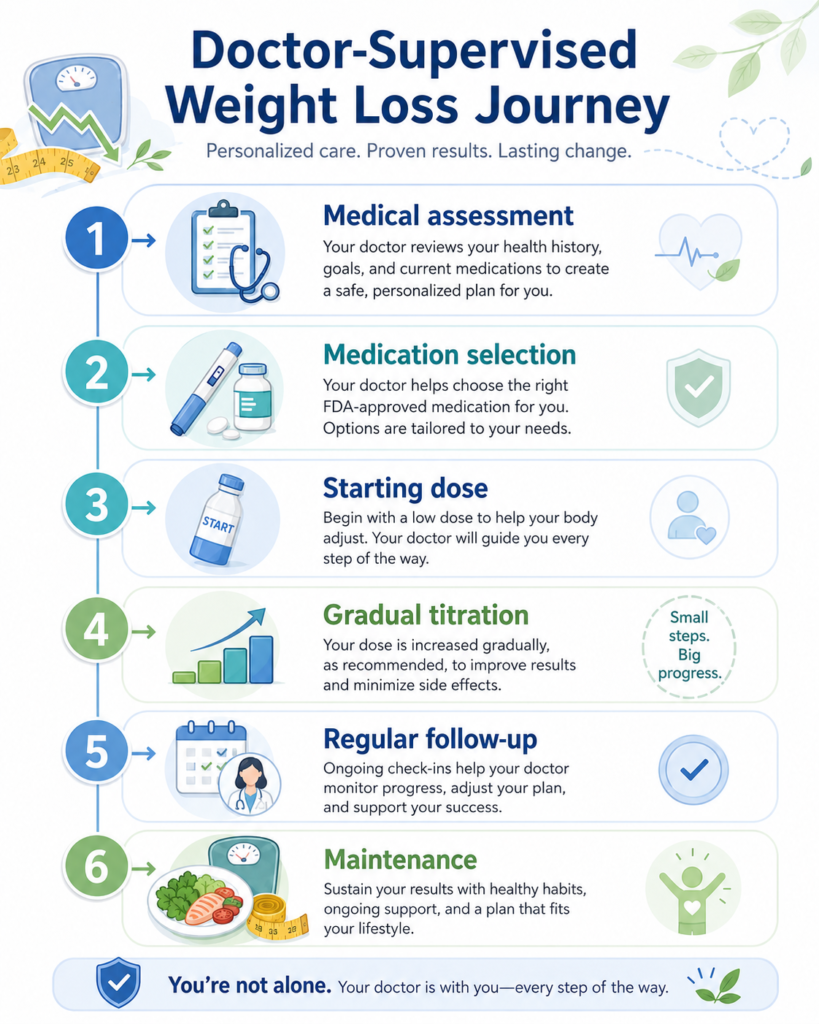
Step 1: Comprehensive consultation
Your clinician reviews your weight history, health conditions, medications, previous attempts at weight loss and treatment goals.
Step 2: Determine whether medication is appropriate
Not everyone who wants to lose weight should receive a GLP-1 medication.
Your physician weighs expected benefits against potential risks.
Step 3: Choose the appropriate medication
The selection should be based on your medical profile rather than whichever drug happens to be trending online.
Step 4: Begin gradually
Treatment usually begins at a starting dose followed by gradual titration according to the specific medication.
Step 5: Monitor your response
Follow-up appointments assess progress, side effects, nutrition, hydration and relevant health markers.
Step 6: Adjust when necessary
The appropriate dose is individualized. More medication is not automatically better.
Step 7: Build a maintenance strategy
A successful program should help you develop habits and a treatment strategy designed for long-term health—not simply reach a number on a scale.
Questions to Ask Before Starting GLP-1 Treatment
Bring these questions to your consultation:
- Which medication are you recommending, and why?
- Is this medication FDA approved for my condition?
- What are the expected benefits for my health?
- What side effects should I expect?
- Which symptoms require urgent medical attention?
- How will my dose be increased?
- What should I eat while taking the medication?
- What should I do if I experience nausea or constipation?
- Will any of my existing medications need adjustment?
- How often will I have medical follow-up?
- How will we determine whether the medication is working?
- What is the long-term maintenance plan?
- What happens if I eventually stop treatment?
- Which pharmacy will dispense my medication?
- Is the product FDA approved or compounded?
Is GLP-1 weight loss safe?
FDA-approved GLP-1-based medications have been studied for safety and effectiveness for their approved indications, but they still carry risks and are not appropriate for everyone. Medical screening, appropriate dosing and follow-up are important.
Can I get a GLP-1 if I am not diabetic?
Yes. Wegovy, Zepbound and Saxenda have FDA-approved weight-management indications for qualifying patients; diabetes is not required for every weight-management indication.
Is Ozempic the same as Wegovy?
Both contain semaglutide, but they are different branded products with different FDA-approved indications and dosing considerations.
Is Mounjaro the same as Zepbound?
Both contain tirzepatide, but their labeled indications differ. Zepbound has an FDA-approved chronic weight-management indication.
Which GLP-1 causes the most weight loss?
Clinical trials show different average results for different medications, but trial averages cannot determine which treatment will be best for an individual patient. Treatment should be selected according to safety, medical history, expected benefit and individual response.
Is retatrutide available yet?
No. As of August 2026, retatrutide remains investigational and is not FDA approved.
Can retatrutide be compounded?
The FDA states that retatrutide cannot be used in compounding under federal law.
Can I combine two GLP-1 medications?
Do not combine GLP-1 or related weight-management medications unless specifically directed by an appropriately qualified physician. FDA labeling for products such as Wegovy, Zepbound and Saxenda includes limitations regarding concomitant use with drugs containing the same active ingredient or other GLP-1 receptor agonists.
Can I take GLP-1 medication during pregnancy?
Weight-loss medications should not be used during pregnancy. Patients who are pregnant, planning pregnancy or become pregnant during treatment should speak with their prescribing clinician.
Do GLP-1 medications increase the risk of suicidal thoughts?
In January 2026, the FDA reported that its comprehensive review did not identify an increased risk of suicidal ideation or behavior associated with GLP-1 receptor agonist medications and requested removal of this warning from labeling for Wegovy, Zepbound and Saxenda.
Can I buy GLP-1 medication online?
Prescription medication should come through a legitimate medical evaluation and an appropriately licensed pharmacy. The FDA has warned patients about unapproved versions of GLP-1 drugs sold for weight loss.
GLP-1 Weight Loss Is Medical Treatment—Not a Shortcut
GLP-1 medications have changed the treatment landscape for people living with overweight and obesity.
But the real opportunity is not simply access to an injection.
It is combining effective medication with:
Appropriate patient selection.
An FDA-approved treatment when appropriate.
Individualized dosing.
Professional medical supervision.
Nutrition and physical activity support.
Regular follow-up.
A long-term maintenance strategy.
Semaglutide, tirzepatide and liraglutide provide different treatment options for appropriate patients today. Retatrutide represents a potentially important future treatment, but it remains investigational and should not currently be purchased or used outside authorized clinical research.
If you are considering GLP-1 weight management, begin with a medical consultation rather than choosing a medication based on social media, advertising or someone else’s results.
The goal should not simply be to lose weight quickly.
The goal is to improve your health safely—and build a plan you can maintain.